as business becomes more internationalized, more and more small and medium-sized enterprises are considering deploying high-defense servers in the united states that require no registration. this article is based on practical experience and focuses on key elements such as compliance, performance and security to help enterprises make more secure decisions when making choices.
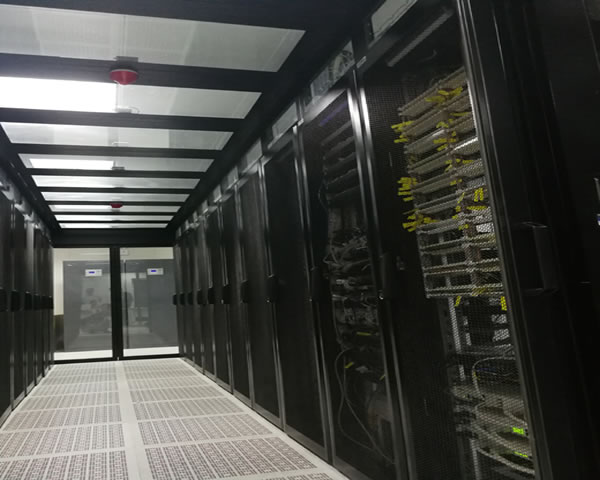
for small and medium-sized enterprises whose target users are overseas or who need to bypass the domestic registration process, the us registration-free high-defense server can quickly go online and provide stable public network access. compared with local deployment, it usually has advantages in cross-border access and international bandwidth, and is also conducive to meeting the compliance and operational needs of multinational businesses.
exemption from filing does not mean complete freedom from legal constraints. enterprises still need to comply with the laws, regulations and content management rules of the target market. when choosing a us server, you should pay attention to data sovereignty, personal information protection and industry regulatory requirements. if necessary, consult professional legal or compliance advisors to ensure that business operations do not touch compliance red lines.
when evaluating high-defense capabilities, attention should be paid to indicators such as anti-ddos traffic size, cleaning efficiency, baseline identification, and false alarm rate. it is necessary to ask whether the cleaning mechanism is based on traffic cleaning or application layer protection, and understand the automated response and manual support processes during attacks to ensure that business availability can still be maintained during high-concurrency attacks.
us nodes have transoceanic delays for domestic users, and small and medium-sized enterprises need to evaluate the impact based on the distribution of the visiting population. delays can be alleviated through solutions such as cdn acceleration, intelligent parsing, and edge caching, and different operator links and exit locations can be tested at the same time to ensure stable response of key pages and interfaces.
server resources need to be elastically scaled quickly when business fluctuates. choosing a solution that supports on-demand capacity expansion, automatic elastic scheduling, and load balancing will help maintain service stability during marketing activities or traffic surges, while avoiding performance bottlenecks or downtime risks caused by insufficient resources.
the high-defense server is only a link in the security chain. it is recommended to combine waf, intrusion detection, log auditing and backup mechanisms to build multi-layer protection. only by improving authority management, certificate mechanisms and emergency plans, and conducting regular vulnerability scanning and penetration testing, can business risks be minimized during attack and defense.
when migrating to a registration-free high-defense server in the united states, you need to plan the dns switching window, data synchronization strategy, and rollback plan in advance. the test environment should replicate the production load as much as possible, switch traffic in stages to reduce risks, and retain a good monitoring and alarm mechanism to catch anomalies during migration in a timely manner.
when evaluating suppliers, pay attention to their network backbone, cleaning center distribution, sla commitments and technical support capabilities. review compliance qualifications, customer cases, and emergency response processes, and give priority to service providers that can provide transparent technical details and verifiable performance indicators, and avoid relying on promises that are only based on marketing propaganda.
cost considerations should include factors such as bandwidth, cleaning traffic, elastic expansion, and operation and maintenance support. by properly configuring specifications, setting traffic peak policies, and adopting layered protection solutions, you can control the total cost of ownership while ensuring security. establishing a clear budget and monitoring costs can avoid subsequent overspending.
establishing a complete monitoring alarm, change management and emergency response process is the key to ensuring long-term stable operation. it is recommended to develop attack response plans, contact channels, and drill plans to clarify roles and responsibilities to ensure that business can be quickly restored in the event of a security incident or network failure.
in practice, the business boundaries, access areas and risk levels should be assessed first, and small-scale testing should be conducted before full traffic is launched online. combining cdn, waf and local caching strategies, deploy protective measures in layers; at the same time, retain monitoring and rollback strategies, and gradually improve the operation, maintenance and compliance system.
when choosing a us registration-free high-defense server, small and medium-sized enterprises should comprehensively consider compliance risks, ddos protection capabilities, network experience and supplier qualifications. it is recommended to conduct adequate technical and compliance assessments, conduct small-scale pilots, and establish multi-layer security protection and complete operation and maintenance processes. promoting overseas deployment in a stable and controllable manner can not only improve risk resistance but also ensure business continuity.
- Latest articles
- Korean Group Website Advertising Strategy, Local Platform Selection And Conversion Rate Improvement
- Network Interconnection And Routing Practice Of Hong Kong Cloud Server Cn2 In Multi-cloud Architecture
- From Logs To Traceability, Tracking And Analysis Methods After Tencent Cloud Hong Kong Server Was Attacked
- Stable And Cheap Malaysian Server For Live Video Broadcast. Key Points Of Delay And Jitter Control
- Sharing The Steps, Risks And Implementation Experience Of Enterprises Migrating To Cambodian Servers Alibaba Cloud
- Complete Huawei Cloud Singapore Server Instance Creation And Environment Configuration From Scratch In One Hour
- Practical Guide To Building A Korean Cloud Server And Designing A Data Backup And Disaster Recovery Center
- Operator Comparison Analysis Of Latency And Stability Of Vietnam Vps Cn2 Different Packages
- How To Choose A Thai Cloud Server? Comparison Of Manufacturer Reputation, SLA And Technical Support
- How To Calculate Elastic Expansion Costs In The Hong Kong Server Hosting Price List Based On Business Peaks
- Popular tags
-
How To Find Cost-effective Us Server Hosting At Low Prices
this article details how to find cost-effective and low-priced us server hosting to help readers choose a server plan that suits them. -

Why Do E-commerce Websites Prefer High-defense Servers In California, USA, To Protect Against Traffic Impact?
Analyze why e-commerce websites prefer high-defense servers in California to protect against traffic impact, covering professional analysis and suggestions in terms of geographical and network advantages, high-defense capabilities, bandwidth flexibility, low-latency experience, compliance, and operation and maintenance. -

Guide To Building A VPN With PPTP Protocol
This article introduces how to use PPTP protocol to build a VPN on a US server, providing detailed steps and suggestions to help you access the Internet safely.